

Film switches and button switches are two common types of switches, each with its own characteristics in design, function, and application. The following are the differences between membrane switches and button switches:
1. Structure and composition
Thin film switch
Structure: Thin film switches are typically composed of multiple layers of thin film materials, including a top layer (decorative layer), a middle conductive layer, an isolation layer, and a bottom layer. These layers are bonded together by adhesive or other means.
Materials: Common materials include plastic films such as polyester (PET), polycarbonate (PC), and polyvinyl chloride (PVC).
Working principle: By pressing the user, the upper and lower conductive layers come into contact, thereby forming a closed circuit.
Key switch
Structure: A key switch typically consists of one or more independent buttons (key caps), springs, bases, and internal contacts.
Material: Button caps are usually made of materials such as plastic and metal, while contact parts are often made of metal materials such as copper and silver.
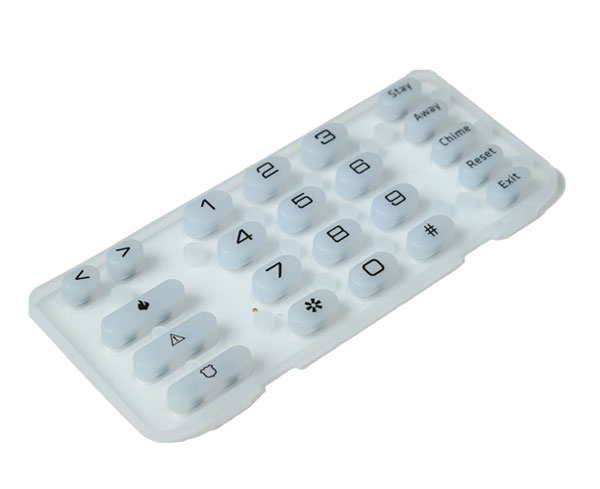
Working principle: By physically pressing the button, the internal contacts are made to contact or separate, achieving the on/off of the circuit.
2. Appearance and feel
Thin film switch
Appearance: The membrane switch can be designed as a flat or curved shape, usually integrated with the surface of the device.
Texture: Due to the fact that the membrane switch achieves its switching function through the contact between the membrane layers, the texture may be slightly softer, sometimes with a slight "click" sound or no sound.
Key switch
Appearance: The button switch usually protrudes from the surface of the device, with a clear sense of three dimensionality.
Texture: Key switches usually have a distinct mechanical feel, with a crisp sound and clear tactile feedback when pressed, letting the user know that the switch has been turned on.
3. Cost and Production
Thin film switch
Cost: The production cost of membrane switches is relatively low and suitable for large-scale production.
Production: Using printing, die-cutting and other processes, it can produce quickly and in large quantities.
Key switch
Cost: Compared to membrane switches, button switches have a higher cost, especially when customized with special shapes or functions.
Production: The production process is relatively complex and requires more assembly steps.
4. Application scenarios
Thin film switch
Application scenarios: Thin film switches are widely used in applications that require flat design, such as home appliances, industrial equipment operation panels, medical equipment, etc.
Key switch
Application scenario: Key switches are suitable for situations that require clear operational feedback, such as computer keyboards, remote controls, telephones, etc.
5. Lifespan and reliability
Thin film switch
Lifespan: The service life of membrane switches is usually long, but due to their structural characteristics, problems such as wear and tear of the conductive layer may occur after long-term use or frequent operation.
Reliability: Under reasonable design, membrane switches have high reliability.
Key switch
Lifespan: The service life of key switches is relatively long, especially high-quality key switches, which can withstand hundreds of thousands or even millions of presses.
Reliability: The reliability of the button switch is high, but due to its mechanical structure, it may be worn or damaged in poor environments.
conclusion
Membrane switches and button switches each have their own advantages and disadvantages, and the choice depends on specific application requirements. Membrane switches are suitable for applications that require low-cost, flat design, while button switches are suitable for applications that require clear operational feedback and a longer lifespan. In practical applications, the appropriate switch type should be selected based on factors such as the device's functional requirements, usage environment, and cost budget.
Address:Room 601, Building 9, No. 180, Maozhushan Road, Changping Town, Dongguan City, Guangdong Province, C
Domain:m.takwai.cn
E-mail:[email protected]